

Clean MobileRecycling Operations
Inland turns clean concrete and asphalt into recycled aggregate using a mobile, organized setup — clean material only, clear handling zones, and no permanent processing plant proposed for typical mobile work.
Clean material in. Recycled aggregate out.
The operation is built around simple controls: inspect the load, keep material in assigned areas, process only clean inert rubble, and move finished aggregate off site.
Clean material received
Incoming concrete and asphalt loads are visually checked before they enter the active recycling flow.
Rubble is staged
An excavator prepares the rubble pile and keeps feed material organized for the crusher.
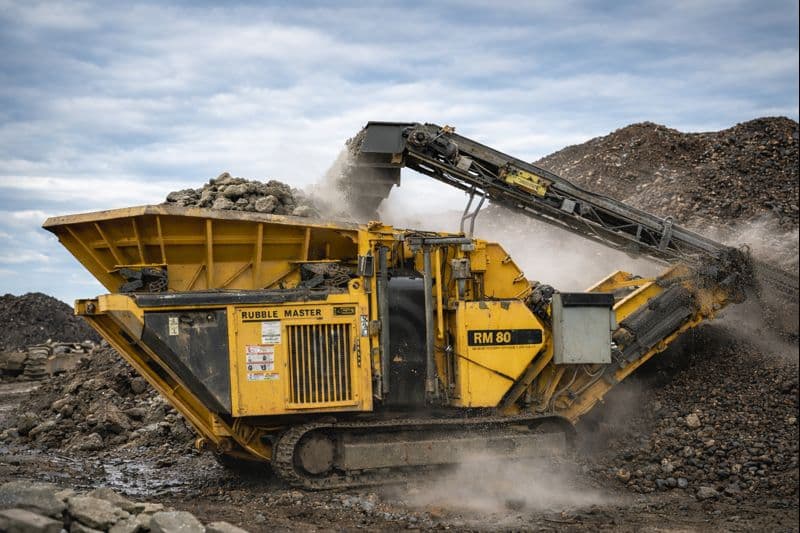
Mobile crushing
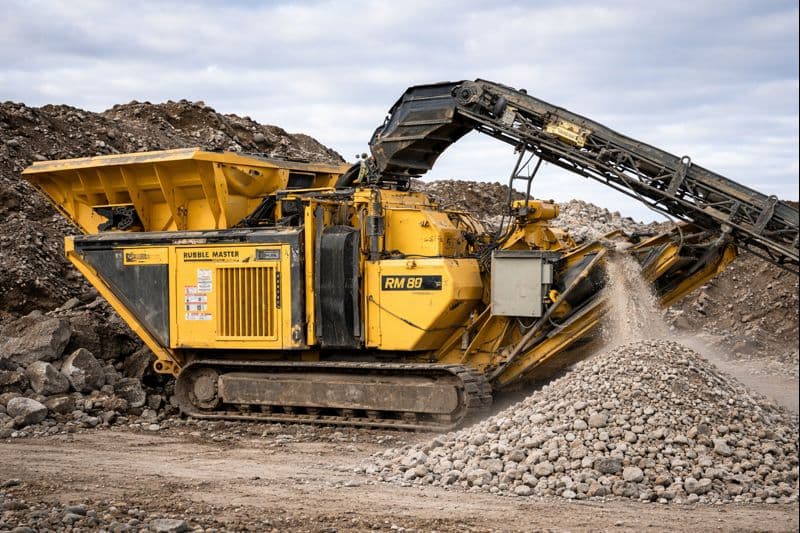
A tracked mobile impact crusher processes material only as needed, without a permanent plant.
Aggregate loaded out
A wheel loader manages finished piles and loads recycled aggregate into outgoing trucks.
Built to answer landowner concerns.
The highest-risk perception is a messy dump yard. Inland's operating plan is the opposite: defined zones, clean material rules, dust suppression, mobile equipment, and site-specific cleanup expectations.
Contained work area
Material stays inside designated zones with clear equipment and truck travel lanes.
Water dust control
Water can be applied to rubble piles, crusher feed, the crusher, and loadout when conditions are dry.
No garbage or hazardous waste
Clean concrete and asphalt only. Mixed waste, contaminated material, and hazardous loads are not accepted.
Mobile fueling
Fuel is handled by tidy tank in a mobile truck; no permanent fuel storage is part of the standard setup.
Site-specific questions get answered first.
A clean operation depends on the layout. Before equipment is staged, the practical questions are access, separation, water, hours, truck movement, and cleanup expectations.
Where do inbound loads enter, wait, dump, and exit?
Where are incoming rubble, crusher feed, finished aggregate, and rejected material separated?
What water source is available for dry or windy conditions?
What operating hours, truck routes, and neighbor constraints need to be respected?
What cleanup and grading standard is expected when the work is complete?
Organized, contained, removable.
These are the practical commitments that keep the land clean while still allowing efficient recycling work.
- Bins or concrete lock blocks can be used where material separation or edge control is required.
- The loader operator inspects incoming material; a dedicated inspector can be added as volume increases.
- Standard operating hours are planned around daytime work, with extended hours discussed before use.
- Tracked mobile equipment can be removed when the work is complete.
- End-of-work cleanup and grading expectations should be confirmed with the site owner before work begins.
Contained layout
Incoming rubble, crusher feed, finished aggregate, loadout, and travel lanes are kept as separate working zones.
Daytime hours
Standard operating window: 7:00 AM–5:00 PM, with any extended work discussed before use.
Load tracking
Material inspection also supports invoicing and recordkeeping as the operation gets busier.
Need a cleaner mobile recycling setup for your site?
Inland can walk through equipment, layout, material controls, and cleanup expectations before work begins.